
For years, the semiconductor talent conversation has centered on engineers.
Design engineers. Process engineers. Electrical engineers.
University pipelines. Advanced degrees. R&D velocity.
That framing is no longer sufficient.
According to PwC, by 2030 the global semiconductor ecosystem will require hundreds of thousands of additional skilled workers, and shortages are already constraining growth today. Critically, these gaps no longer sit only in chip design. They now extend across manufacturing, packaging, testing, maintenance, and uptime.
In real operations, this shift shows up quickly and quietly.
Not in roadmaps.
Not in simulation models.
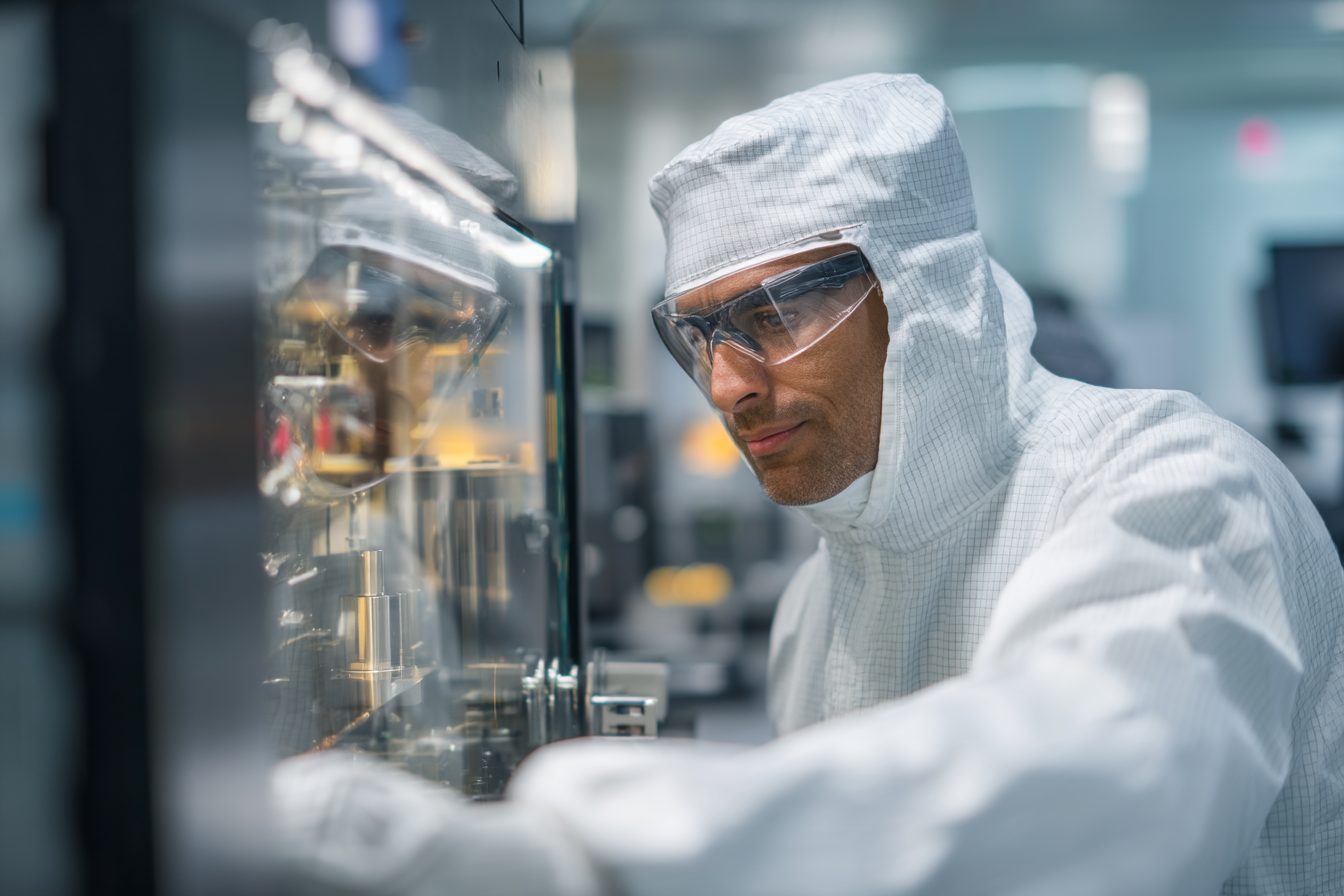
But on the fab floor and inside the data hall.
During a maintenance window that runs long.
During an escalation where experience matters more than theory.
During off hours, when systems do not care that staffing plans looked good on paper.
This is no longer just an engineering problem.
It is an operational risk problem.
While semiconductor fabs and data centers serve different roles in the value chain, both operate in high-risk, high-density environments where uptime depends on field-ready technicians, not just advanced design.
When Talent Gaps Become Downtime
Modern semiconductor fabs and data centers are unforgiving environments. These are tightly coupled systems with significant power density, complex thermal dependencies, and minimal tolerance for error. As chip architectures and compute workloads become more advanced, the physical infrastructure that supports them becomes less forgiving, increasing the operational consequences of even small gaps in readiness.
PwC’s outlook highlights that as system complexity increases, reliability and resilience become defining competitive factors. Inspection, maintenance, and operational execution are no longer secondary concerns. They are core to performance.
Yet many organizations continue to scale facilities faster than they scale field-ready talent. That imbalance creates predictable outcomes:
- Equipment is installed faster than expertise develops
- SOPs exist, but situational judgment lags
- Escalations bottleneck because too few people can diagnose confidently
- Maintenance is deferred to avoid risk, increasing it instead
This is what the semiconductor talent gap looks like in practice.
Not dramatic failure.
Gradual fragility.
You Cannot Scale Fabs Without Scaling Field-Ready Technicians
There is a persistent assumption in the industry that field roles are easier to fill than engineering roles.
They are not.
What has changed is the level of capability the field now requires.
Today’s technicians and entry-level data center engineers must arrive able to:
- Identify and understand complex facility systems
- Recognize and work safely around multiple voltage classes
- Use diagnostic tools correctly and interpret readings under supervision
- Understand precision cooling and basic thermal behavior
- Follow structured processes for escalation, maintenance, and change
These are no longer advanced skills. They are baseline requirements.
PwC’s workforce analysis makes this clear. As semiconductor operations evolve, the constraint is not only design talent. It is the availability of people who can safely operate, maintain, and protect mission-critical systems day after day.
Facilities do not scale on headcount alone.
They scale on readiness.
Field Service Is Infrastructure, Not Staffing
This is where the mindset shift must happen.
Field service is often discussed using staffing language. Coverage. Backfill. Ramp time. Attrition.
That language underestimates the role.
In high-reliability environments, field service functions as infrastructure.
Trained technicians are a system dependency in the same way that power, cooling, and redundancy are system dependencies. When that layer is weak, every other investment becomes fragile.
Strong operations treat field personnel as:
- Risk controls
- Safety enforcers
- First responders for uptime
- The human layer between automation and failure
Organizations that recognize this invest in foundational capability early, before people ever enter live environments.
What Readiness Actually Means Now
Readiness is not theoretical in a fab or data center. A genuinely prepared entry-level technician should be able to:
- Identify common critical facility equipment and explain its purpose
- Understand electrical fundamentals and voltage distinctions
- Safely use diagnostic tools such as multimeters
- Describe how precision cooling works and why it matters
- Enter controlled environments ready for supervised, hands-on OJT
After completing site-specific qualifications, they must also:
- Demonstrate understanding of local Site Operating Procedures
- Follow established change management and escalation workflows
- Operate as a productive team member without compromising safety
This does not replace on-the-job training.
It de-risks it.
Foundational readiness shortens time to productivity, reduces supervision burden, and protects uptime during the most vulnerable phase of a technician’s lifecycle.
The Cost of Getting This Wrong
The semiconductor industry is entering its most aggressive expansion cycle in decades, driven by AI, data center growth, energy transition, and reshoring initiatives.
Facilities are being built. Tools are being installed. Capital is being deployed.
But the most common point of failure is not technology.
It is the assumption that people will simply catch up.
PwC’s message is clear. Talent is now a system-level constraint. And system-level constraints must be engineered, not improvised.
Organizations that underinvest in field readiness will face:
- Slower realization of capital investments
- Higher operational risk
- Longer recovery times
- Growing gaps between design ambition and operational reality
The Bottom Line
The semiconductor talent gap is not a future concern.
It is not confined to universities or R&D teams.
And it cannot be solved by hiring faster alone.
It is a field problem, and it shows up as downtime, risk, and lost momentum.
Companies that treat field service as infrastructure, not staffing, will scale more safely, more predictably, and with greater resilience.
Because even the most advanced systems in the world still depend on something fundamental:
People who are ready when it matters. Chips run on the tools these manufacturers build. Those tools run because of the people who install them. Uptime Crew builds the people who keep the future online.