
Military electricians, HVAC and utilities technicians, power-generation mechanics, and electronics and avionics technicians are the closest fit for semiconductor technician work. That includes Army 12R, 91C and 91D; Navy EM, ET and MM; Air Force 3E0X1 and 3E1X1; Marine Corps 1141 and 1164; and Coast Guard EM, ET and MK.
The match is the work itself. A fab technician keeps complex production equipment running, troubleshoots it when it stops, and works to strict safety procedures. Those are the things these military jobs train you to do. Uptime Crew hires Level 1 Technicians for semiconductor manufacturers and pays you while you train, starting at $60K, so you don’t need semiconductor experience to start.
What does a semiconductor technician do?
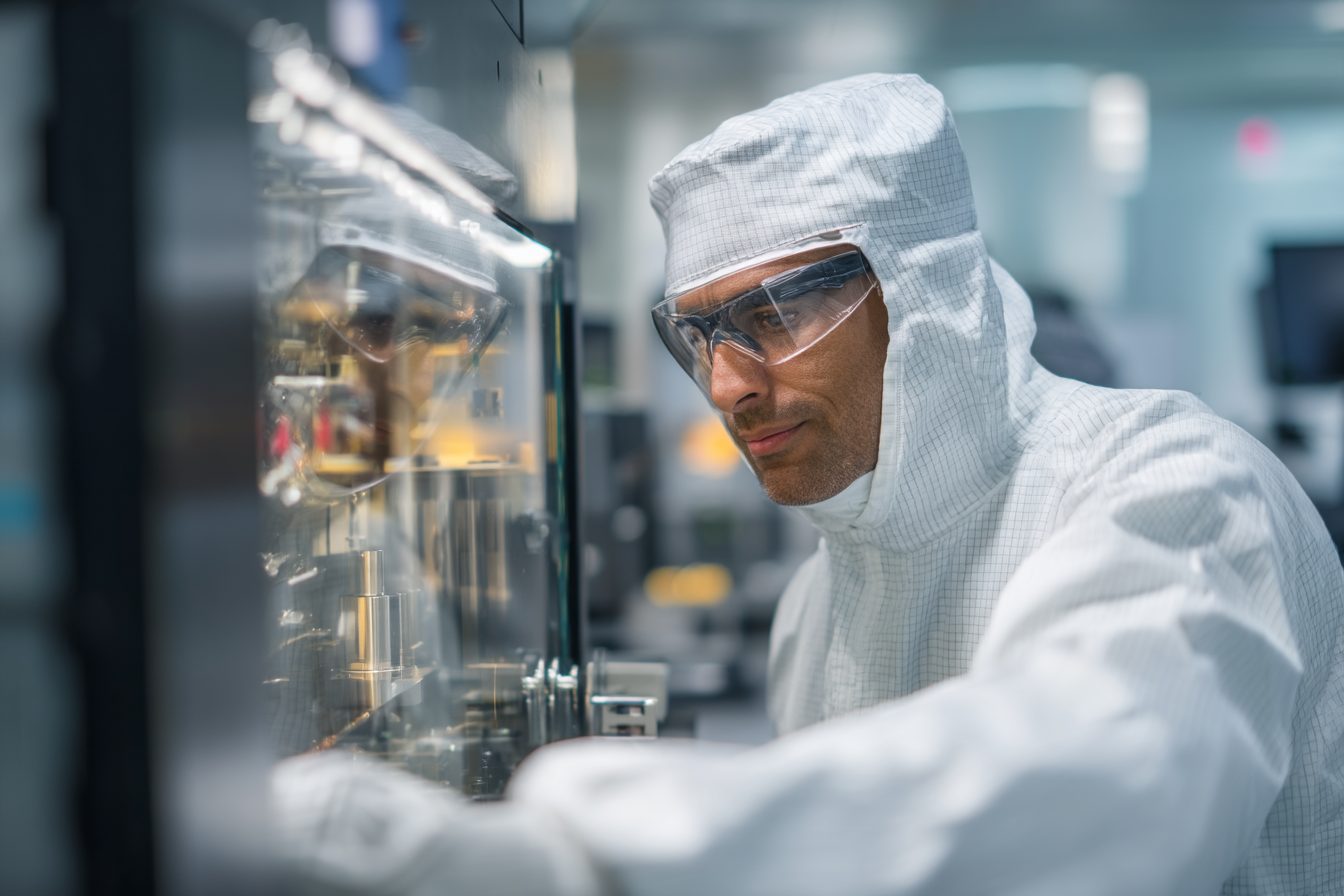
A Level 1 Technician helps keep semiconductor production equipment ready and running in a cleanroom. When a tool goes down, you’re part of the team that brings it back. The role calls for mechanical aptitude, solid troubleshooting skills, attention to detail and a safety-first habit.
- Where: inside a cleanroom at a semiconductor fab
- Schedule: fabs run around the clock, so most technician roles are shift work. Schedules vary by site.
- Experience: no semiconductor experience needed
- Training: selected candidates join Uptime Crew as full-time employees for 4 to 10 weeks of paid training built around the role
Which military jobs fit semiconductor technician work?
These military occupations involve day-to-day work closest to the role. Treat the list as a starting point, not a cutoff. If you worked hands-on with electrical, mechanical, HVAC, electronics or aviation systems in any branch, you’re who we’re looking for.
| Branch | Job | Why it fits |
|---|---|---|
| Army | 12R Interior Electrician | Wiring, panels and live electrical troubleshooting |
| Army | 91C Utilities Equipment Repairer | HVAC, refrigeration and utility equipment |
| Army | 91D Power-Generation Equipment Repairer | Generators, switchgear and backup power |
| Army | 94F Computer/Detection Systems Repairer | Fault-finding in complex electronic systems |
| Navy | Electrician's Mate (EM) | Power distribution, motors and controllers |
| Navy | Electronics Technician (ET) | Electronics maintenance and diagnostics |
| Navy | Machinist's Mate (MM) | Pumps, compressors and mechanical systems |
| Navy | Aviation Electronics Technician (AT) | Avionics test and repair |
| Air Force | 3E0X1 Electrical Systems | Facility power distribution and electrical systems |
| Air Force | 3E0X2 Electrical Power Production | Generators, transfer switches and standby power |
| Air Force | 3E1X1 HVAC/R | Heating, cooling and refrigeration systems |
| Air Force | 2A6X6 Aircraft Electrical and Environmental Systems | Aircraft power and environmental controls |
| Marine Corps | 1141 Electrician | Electrical installation and repair |
| Marine Corps | 1164 Utilities Systems Technician (formerly 1142 and 1161) | Power, refrigeration and environmental equipment |
| Coast Guard | Electrician's Mate (EM) | Electrical generation and distribution |
| Coast Guard | Electronics Technician (ET) | Electronics and communications systems |
| Coast Guard | Machinery Technician (MK) | Engines, refrigeration and auxiliary systems |
What military skills carry over to a chip fab?
- Working to procedure. Fab equipment is maintained to written procedures. So was the equipment you worked on.
- Safety as a habit. Lockout/tagout, PPE and double-checking before you touch anything.
- Shift work. If you’ve stood watch, round-the-clock operations will feel familiar.
- Troubleshooting under pressure. When a tool is down, people turn to the person who stays calm and finds the fault.
Where are semiconductor technician jobs?
The U.S. is building and expanding chip fabs. The CHIPS and Science Act set aside $39 billion in federal manufacturing incentives to build, expand or modernize U.S. semiconductor facilities. A 2023 study by the Semiconductor Industry Association and Oxford Economics projects that the U.S. semiconductor workforce will grow by about 115,000 jobs by 2030, and that about 67,000 of those jobs risk going unfilled. Technicians make up 39% of the at-risk jobs.
That gap is why Uptime Crew builds new technician supply instead of waiting for it to appear. See how we work with semiconductor manufacturers and data centers, where the same skills apply. Chips are also a national-security priority, which is one reason the CHIPS Act exists.
What does the role pay?
- Level 1 Technician pay: Year 1 $60K · Year 2 $70K · Year 3* $95K
- Paid from the first day of training, as a full-time Uptime Crew employee
- Relocation assistance up to $3,000
*Annual pay shown. Year 3 is illustrative. Confirm pay and advancement criteria with your recruiter. Placement requires successful training completion.
Still serving? Start the conversation early
If you’re planning your transition, email vets@uptimecrew.com with your experience and your separation timeline, and we’ll follow up.
FAQs
Which military jobs fit semiconductor technician work?
Hands-on maintenance jobs in electrical, HVAC and utilities, power generation, electronics and avionics. Examples include Army 12R, 91C and 91D; Navy EM, ET and MM; Air Force 3E0X1, 3E0X2 and 3E1X1; Marine Corps 1141 and 1164; and Coast Guard EM, ET and MK.
How long does it take to go from the military to a semiconductor technician job?
Selected candidates start as full-time Uptime Crew employees and train for 4 to 10 weeks, paid.
Is the training paid?
Yes. Selected candidates join Uptime Crew as full-time employees and are paid during 4 to 10 weeks of training.
How much does a Level 1 Technician earn?
Level 1 Technicians earn $60K in year 1 and $70K in year 2, with relocation assistance up to $3,000. Pay after year 2 depends on advancement; your recruiter can confirm the details.
Do I need to be a veteran or have semiconductor experience to apply?
No to both. The role is open to anyone with strong mechanical aptitude and troubleshooting skills, and paid technical training prepares you for it.
My military job isn't on the list. Should I still apply?
Yes, if your work was hands-on with electrical, mechanical, HVAC, electronics or aviation systems.